
Unlocking Optical Parallelism for the Everything Over Optical™ era

Pilot Photonics’ Hybrid Laser Breakthrough As the demand for AI acceleration, cloud computing, and disaggregated architectures intensifies, traditional copper interconnects are reaching physical limitations. At Pilot Photonics, we’re heralding the Everything over Optical™ era by addressing a critical bottleneck in data scaling: the need for high-power, multi-wavelength optical sources. The Copper Interconnect Bottleneck Copper interconnects are increasingly inadequate for supporting the exponential growth in bandwidth required by next-generation data centre architectures. At high data rates, the reach of copper interconnects fall dramatically, while the power needed to drive the signals increases substantially Optical interconnects, in contrast, offer: The need for change is evident: scalable, efficient, multi-terabit optical interconnects are essential for future connectivity. Bridging the Gap: From Scale-Out to Scale-Up We’ve already made the first leap — most modern data centres already rely on optical links such as CWDM4, PSM4, and DR4 to scale-out between racks and clusters, replacing copper in many mid-reach connections. But the next frontier is scale-up: bringing that same optical efficiency inside the system, between accelerators, memory pools, and compute tiles. Many of the longer links inside the data centre today use four wavelength coarse wavelength division multiplexing (CWDM4). However due to dispersion at high data rates, CWDM with its broad wavelength spacing does not scale well. To continue to meet escalating bandwidth demands, particularly in the scale-up segment, optical links must increase wavelength counts, from today’s common 4 wavelength links to 8, 16, or even higher. The industry is now converging on CW-WDM multi-source agreement, allowing denser channel spacing, as shown in the diagram below. Two primary approaches for the optical source are prevalent in this drive to higher channel count optical links: Laser arrays and comb lasers are each potential solutions to the copper interconnect bottleneck, but each have their own challenges and limitations A Hybrid Solution: ExCELS™ Pilot Photonics is developing a hybrid solution—ExCELS™ (External Comb-Enhanced Laser Source)—that combines the strengths of both approaches. By integrating a high-accuracy microcomb with a high-power laser array through optical injection locking, ExCELS™ delivers: Injection Locked Comb Demultiplexing for Enhanced Performance Our patented chip-scale micro-resonator combs, combined with integrated demultiplexing and amplification, enable a significant increase in comb line power and a substantial improvement in RIN compared to the traditional solution of a SiN comb with passive demultiplexing. This advancement translates to a capacity boost in high-performance applications such as co-packaged optics (CPO), optical I/O systems as well as traditional pluggable optics. Testing has shown greater than 3X capacity improvement, for the same received optical power. For CPO, the technology will be implemented in OIF-compliant External Laser Small Formfactor Pluggable (ELSFP), ensuring seamless integration into CPO infrastructure. Pilot’s solution delivers a significant improvement in RIN CW-WDM Product Portfolio Pilot Photonics is commercializing CW-WDM MSA focused products: Both platforms are flexible, customizable, and ready to support AI-scale networking, system prototyping, and future data centre deployments. Join us as we enable the Everything over Optical™ era.Contact us at sales@pilotphotonics.com
Shining A Spotlight On…Mahrokh Avazpour
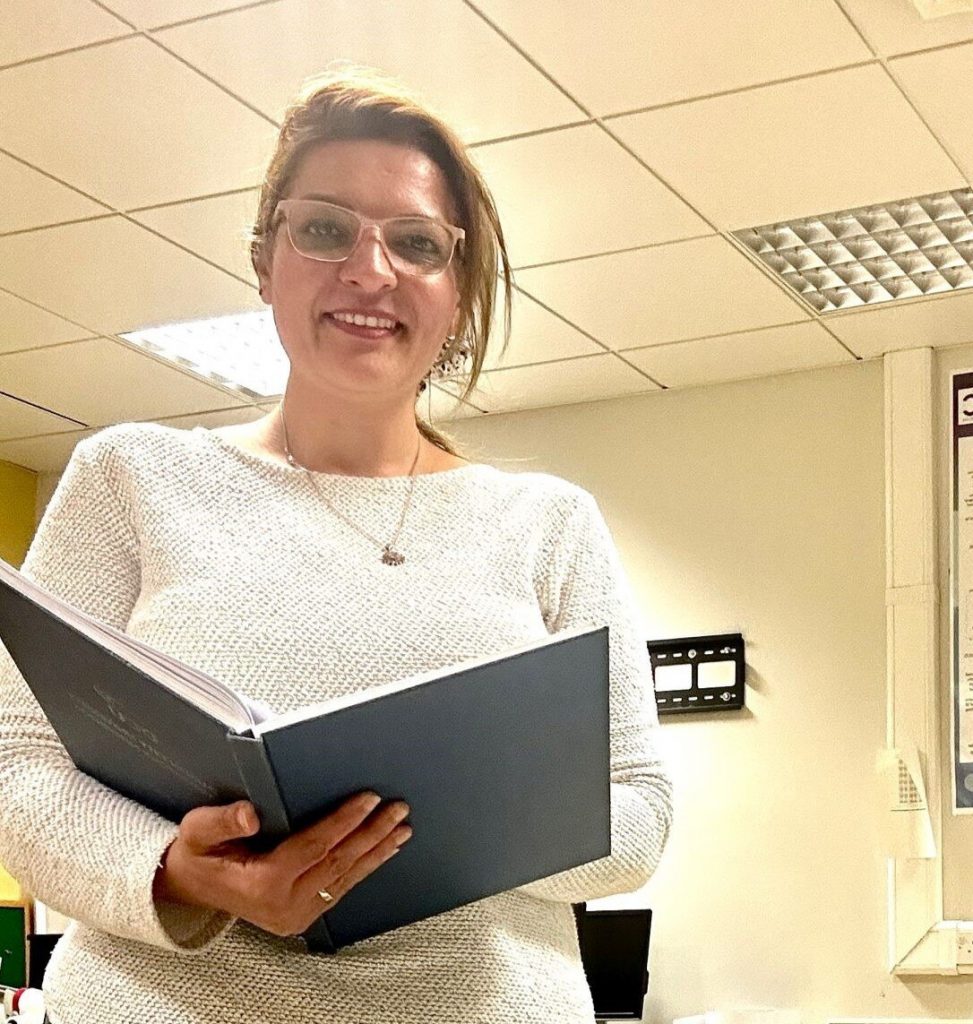
Welcome to the first of our ‘Shining a Spotlight on…’ blogs as we introduce you to our team. This blog features postdoctoral intern, Mahrokh Avazpour, as she reaches the end of her secondment and reflects on her time at Pilot. Where’s home to you? I’m originally from Iran, and that’s where my family still live. My life has taken me on an incredible journey—a Master’s degree in India, three years as a research assistant in Malaysia, a PhD in University of Puebla, Mexico, and Postdoc in Dublin City University, Ireland. This international experience has shaped me profoundly, and home is less a place and more a feeling—a sense of comfort, connection, and support – woven from the places I’ve lived and the people I cherish. Currently, Ireland feels closest to that sense of home, particularly because of the welcoming atmosphere and vibrant cultural scene. I’m not quite sure where I’ll end up, but the journey so far has been extraordinary. When did you join Pilot? I joined Pilot on a post-doctoral secondment in November 2024. That’s coming to an end at the end of February 2025. What projects do you work on at Pilot, and where does your work fit in to the company’s operations? At Pilot, my work focuses on SiN micro-resonators for generating optical frequency combs. During my PhD, I worked on designing and characterizing optical fiber loop modulation and pulse characterization. After completing my PhD at Dublin City University, I began working on actively mode-locked fiber lasers to generate optical combs, where polarization instability was a significant challenge. My current work at Pilot on micro-ring resonators aligns well with my background and expertise in optical frequency comb generation. What does a typical day look like for you? As I am here for a short period as part of my postdoctoral secondment, I work closely with the photonic engineers. Typically, I follow the schedule set by the group’s senior photonic engineer, who is currently leading the project I’m working on. We spend much of the day in the lab, and carry out a range of experiments and investigations with a view to identifying and selecting the most suitable resonators, stabilising them in optical packages and further integrating them into our hardware platforms. This hands-on work allows me to contribute directly to the project while gaining valuable experience in photonic integration and experimental techniques. What excites you about what we do at Pilot? What excites me most about Pilot is the cutting-edge research and innovation in photonics. The opportunity to work on micro-resonators for optical frequency comb generation aligns perfectly with my expertise and interests. I am particularly fascinated by the practical applications of this technology in fields such as telecommunications, and space. Additionally, there is an excellent collaborative environment at Pilot, where the team works together to push the boundaries of photonics, makes it an inspiring place to contribute and grow. The hands-on experience in the lab, coupled with the chance to solve real-world challenges, fuels my passion for advancing optical technologies. What does a successful day look like? A successful day is one where I make meaningful progress for my project and for the company. This could be through troubleshooting technical challenges, gaining new insights, or reaching new conclusions that can feed decision making and achieving successful project/product outcomes. Collaboration is also a key part of a successful day—productive discussions, learning from experienced photonic engineers, and sharing findings that help drive the project forward. What challenges do you experience? There are regular challenges that present themselves when trying to push the state of the art, particularly in a small company. There are a lot of demands on the team and resources to meet important customer and project deadlines. Sometimes this can impact my project. However, these challenges, and working in such a fast-paced environment, are also part of the learning process so overcoming them and reaching the goals brings a strong sense of accomplishment. What do you particularly enjoy about being part of the Pilot team? Being part of the Pilot team is a highly rewarding experience. I particularly enjoy the collaborative and innovative environment, where I get to work alongside skilled photonic engineers and researchers who are passionate about advancing optical technologies. The opportunity to engage in hands-on experiments and tackle real-world challenges in photonics is both exciting and intellectually stimulating. I also appreciate the supportive atmosphere within the team. There is a strong culture of knowledge sharing, where I can learn from experienced colleagues while also contributing my own expertise. The diversity of ideas and problem-solving approaches, which I see frequently in meetings where we discuss various challenges, makes each day interesting and helps me grow both professionally and technically. Furthermore, the access to advanced laboratory facilities and cutting-edge research tools allows me to deepen my understanding of photonic integration and optical frequency comb generation. This is my first experience of working in industry rather than academia and, although my time here has been short, it has been a valuable experience. I hope to have the opportunity to join industry full-time in the near future. Overall, being part of the Pilot team provides an inspiring and dynamic environment that fosters continuous learning and development. How do you enjoy your time when you’re not at work? Exploring scenic places helps me clear my mind and recharge my batteries, so when I’m not at work, I spend time outdoors; going for walks along the beach or in nature. Friends and family are important to me, and I like socializing, so you’ll often find me hosting barbecues, singing, or engaging in traditional Persian dancing. It’s been an absolute pleasure having you working with us, Mahrokh. You have been an important asset to the team with your thorough approach to investigation and testing, and your analytical skills. We’ll miss you when your secondment comes to an end, and we wish you all the best with your next steps.