
Photonic Integrated Frequency Combs for Space Science Mission Applications
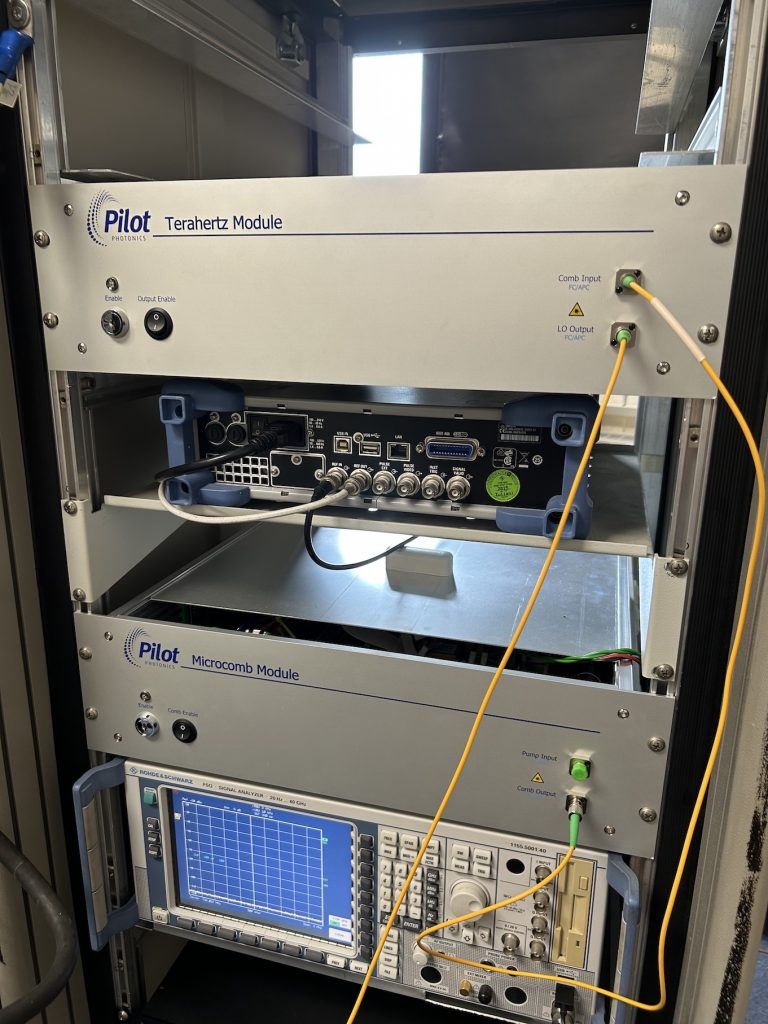
To celebrate the completion of validation testing for our space microcombs, we have put together an overview of our project with the European Space Agency, Miniaturised Frequency Comb for Science Mission Applications (MiCoSMic), and our ongoing development of a two comb optical system for space science. Why space science satellites can use optical combs Space science depends on precise, efficient instrumentation engineered for use under specific environmental constraints. High-resolution spectrometers are essential for broadening the range of astrophysical objects from which data can be obtained. To identify chemical signatures, star systems, and exoplanets, these spectrometers must maintain high accuracy. Achieving and raising this level of accuracy is an ongoing challenge for space tech. The ideal calibration sources for spectrometers should provide a high density of bright, regularly spaced optical lines. They should have a broad bandwidth coverage and be ultra-stable. Gas emission lamps, the industry standard, suffer from long-term instability and irregularly-spaced spectral lines. An alternative is to use an optical frequency comb as the calibration source. Optical frequency combs consist of a series of equally spaced mutually coherent wavelengths of light, often referred to as comb lines. Comb sources provide the characteristics required for in-flight recalibration and monitoring, but so far they have been too bulky and too power hungry to fly on board. Miniature and efficient optical combs are a promising alternative. System schematics of where integrated optical frequency combs can enhance space science instrumentation. When performing measurements in the terahertz region of the electromagnetic spectrum, heterodyne detection techniques are often the only practical approach. These frequencies lie beyond the bandwidth of conventional direct-detection systems, making it difficult to observe the weak signals emitted by sources such as the interstellar medium. Heterodyne detection requires a local oscillator, which is a stable reference signal that helps measure incoming radiation. By mixing the two together, the high-frequency signal is shifted down to a lower frequency, where it can be easily measured using standard electronics. Oftentimes, local oscillators consist of a complex chain of electronic frequency multipliers and amplifiers that are cascaded in order to generate the required carriers. Again, optical comb sources offer an alternative technological solution. Suitable carriers can be generated through the optical heterodyning of two comb lines from an optical frequency comb, producing a signal at their frequency difference. The spacing between these comb lines, known as the free spectral range (FSR), determines the range of frequencies that can be generated in this way, and can vary from GHz in gain-switched combs to THz in dissipative Kerr soliton (DKS) combs, depending on the comb generation mechanism and device design. Both comb technologies can be implemented using photonic integrated circuits (PICs), enabling compact and scalable solutions that offer significant reductions in size, weight, power, and cost (SWaP-C). How our photonic chips make for innovative optical combs In MiCoSMic, we are utilising two different comb technologies to develop hardware that can meet the demands of these two application areas. The first is a DKS comb, generated through the high power optical pumping of a silicon nitride micro-ring resonator. This comb platform allows for the generation broadband frequency combs, with beyond an octave of spectral coverage possible. Within MiCoSMic, the FSR of our microcomb is 383 GHz, with this dependent on the physical geometry of the micro-ring resonator itself. The broad spectral coverage and equally spaced comb lines make this comb technology the ideal candidate for use as a calibration source for optical spectrometers, replacing the need to use multiple gas emission lamps to achieve the same coverage. A standalone microcomb module has been developed, and was tested as part of the spectrometer calibration application validation tests. Optical microcombs in early testing at Pilot. Gain-switched optical frequency combs, the second comb technology utilised within MiCoSMic, provide complimentary trade-offs to DKS. Generated through the direct modulation of the DC bias of a semiconductor laser around its threshold using a high power RF signal, gain-switched combs provide a more flexible comb than our DKS comb. The frequency of the RF signal used for gain-switching determines the FSR of the comb, allowing for a high degree of tunability and accuracy when selecting the comb line spacing. However, the spectral bandwidth of these combs is more limited, usually only covering a number of nanometres. Within this project, we demonstrate a hybrid optical frequency comb achieved by injection-locking a DKS comb and a gain-switched comb to offer attractive features of each comb; broad bandwidth from the DKS comb, and precise flexible frequency operation from the gain-switched comb. The terahertz frequency carriers, suitable for use as local oscillators, are generated via optical heterodyning. Optical heterodyning mixes two optical signals on a fast photodiode to produce an electrical signal equal to their frequency difference. The mutual phase coherence between comb lines results in carriers with reduced RF linewidth, and improved frequency stability and phase performance compared to carriers generated from independent laser sources. An additional Terahertz Module has been developed to support the generation of the gain-switched comb. Both the Microcomb Module and the Terahertz Module will be tested in unison to generate carriers in the 0.6 – 1 THz range. Together, these approaches highlight the versatility of optical frequency combs, combining broad spectral coverage, high stability, and flexible operation. By leveraging the complementary strengths of different comb technologies, MiCoSMic demonstrates a pathway towards compact, high performance sources capable of meeting the demanding requirements of both spectrometer calibration and terahertz heterodyne detection. Furthermore, the integration of these technologies onto photonic integrated circuits (PICs) offers a clear route towards significant SWaP reductions, enabling more compact, efficient, and scalable solutions for future space and sensing applications. Validation testing of the modules at Maynooth University (left) and the Royal Belgian Institute for Space Aeronomy (right). See you at ICSO? Following design, manufacture and preliminary functionality testing, the modules have now finished testing with our validation partners in the project. Royal Belgian Institute for Space Aeronomy (BIRA-IASB), based in Brussels, tested the optical frequency comb source as a calibration source for
Shining A Spotlight On…Mahrokh Avazpour
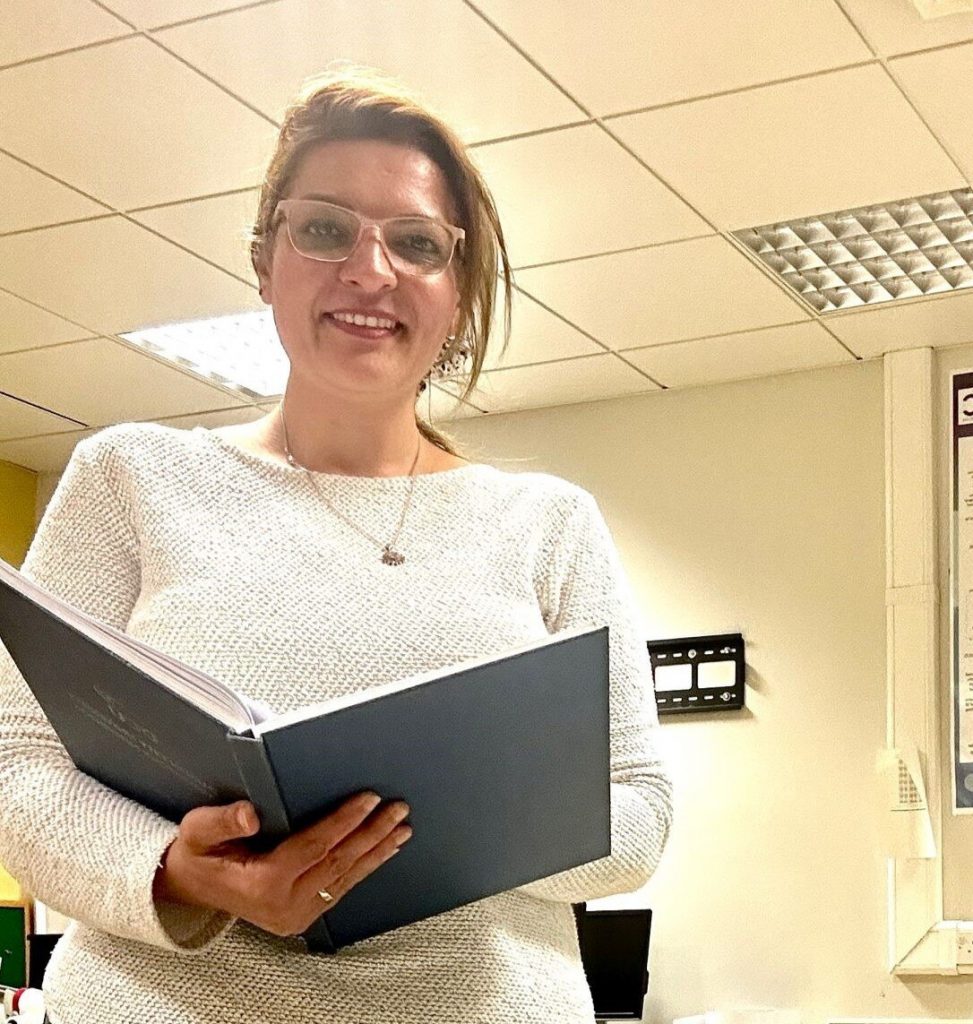
Welcome to the first of our ‘Shining a Spotlight on…’ blogs as we introduce you to our team. This blog features postdoctoral intern, Mahrokh Avazpour, as she reaches the end of her secondment and reflects on her time at Pilot. Where’s home to you? I’m originally from Iran, and that’s where my family still live. My life has taken me on an incredible journey—a Master’s degree in India, three years as a research assistant in Malaysia, a PhD in University of Puebla, Mexico, and Postdoc in Dublin City University, Ireland. This international experience has shaped me profoundly, and home is less a place and more a feeling—a sense of comfort, connection, and support – woven from the places I’ve lived and the people I cherish. Currently, Ireland feels closest to that sense of home, particularly because of the welcoming atmosphere and vibrant cultural scene. I’m not quite sure where I’ll end up, but the journey so far has been extraordinary. When did you join Pilot? I joined Pilot on a post-doctoral secondment in November 2024. That’s coming to an end at the end of February 2025. What projects do you work on at Pilot, and where does your work fit in to the company’s operations? At Pilot, my work focuses on SiN micro-resonators for generating optical frequency combs. During my PhD, I worked on designing and characterizing optical fiber loop modulation and pulse characterization. After completing my PhD at Dublin City University, I began working on actively mode-locked fiber lasers to generate optical combs, where polarization instability was a significant challenge. My current work at Pilot on micro-ring resonators aligns well with my background and expertise in optical frequency comb generation. What does a typical day look like for you? As I am here for a short period as part of my postdoctoral secondment, I work closely with the photonic engineers. Typically, I follow the schedule set by the group’s senior photonic engineer, who is currently leading the project I’m working on. We spend much of the day in the lab, and carry out a range of experiments and investigations with a view to identifying and selecting the most suitable resonators, stabilising them in optical packages and further integrating them into our hardware platforms. This hands-on work allows me to contribute directly to the project while gaining valuable experience in photonic integration and experimental techniques. What excites you about what we do at Pilot? What excites me most about Pilot is the cutting-edge research and innovation in photonics. The opportunity to work on micro-resonators for optical frequency comb generation aligns perfectly with my expertise and interests. I am particularly fascinated by the practical applications of this technology in fields such as telecommunications, and space. Additionally, there is an excellent collaborative environment at Pilot, where the team works together to push the boundaries of photonics, makes it an inspiring place to contribute and grow. The hands-on experience in the lab, coupled with the chance to solve real-world challenges, fuels my passion for advancing optical technologies. What does a successful day look like? A successful day is one where I make meaningful progress for my project and for the company. This could be through troubleshooting technical challenges, gaining new insights, or reaching new conclusions that can feed decision making and achieving successful project/product outcomes. Collaboration is also a key part of a successful day—productive discussions, learning from experienced photonic engineers, and sharing findings that help drive the project forward. What challenges do you experience? There are regular challenges that present themselves when trying to push the state of the art, particularly in a small company. There are a lot of demands on the team and resources to meet important customer and project deadlines. Sometimes this can impact my project. However, these challenges, and working in such a fast-paced environment, are also part of the learning process so overcoming them and reaching the goals brings a strong sense of accomplishment. What do you particularly enjoy about being part of the Pilot team? Being part of the Pilot team is a highly rewarding experience. I particularly enjoy the collaborative and innovative environment, where I get to work alongside skilled photonic engineers and researchers who are passionate about advancing optical technologies. The opportunity to engage in hands-on experiments and tackle real-world challenges in photonics is both exciting and intellectually stimulating. I also appreciate the supportive atmosphere within the team. There is a strong culture of knowledge sharing, where I can learn from experienced colleagues while also contributing my own expertise. The diversity of ideas and problem-solving approaches, which I see frequently in meetings where we discuss various challenges, makes each day interesting and helps me grow both professionally and technically. Furthermore, the access to advanced laboratory facilities and cutting-edge research tools allows me to deepen my understanding of photonic integration and optical frequency comb generation. This is my first experience of working in industry rather than academia and, although my time here has been short, it has been a valuable experience. I hope to have the opportunity to join industry full-time in the near future. Overall, being part of the Pilot team provides an inspiring and dynamic environment that fosters continuous learning and development. How do you enjoy your time when you’re not at work? Exploring scenic places helps me clear my mind and recharge my batteries, so when I’m not at work, I spend time outdoors; going for walks along the beach or in nature. Friends and family are important to me, and I like socializing, so you’ll often find me hosting barbecues, singing, or engaging in traditional Persian dancing. It’s been an absolute pleasure having you working with us, Mahrokh. You have been an important asset to the team with your thorough approach to investigation and testing, and your analytical skills. We’ll miss you when your secondment comes to an end, and we wish you all the best with your next steps.